
Veneers After Root Canal: Can a Treated Tooth Take a Veneer?

Veneers after root canal treatment come up the moment an old front tooth starts to grey. It still works fine, whitening does nothing for it, and you want to know whether a thin ceramic shell can fix it.
So you start searching, and the answers contradict each other. Some say veneers after root canal are perfectly normal, others say you need a crown and nothing else will do.
Both camps are describing real cases. The difference is what is left of the tooth underneath, and that is something only an exam and an X-ray can answer.
This article explains what actually changes inside a root-canal-treated tooth, the three questions that decide veneer versus crown, and how to plan the visit if you are travelling for treatment.
Veneers after root canal: what the treatment changes inside the tooth
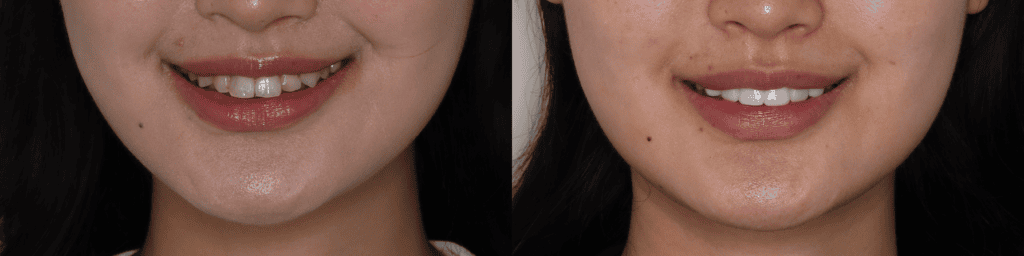
A root canal removes the nerve and blood supply from the inside of the tooth. The outer shell — enamel and dentin — stays where it is.
Think of a wooden beam that has fully dried out. It still holds weight in place, but it flexes less and splits more easily under a sudden load.
A treated tooth behaves in a similar way. It is not weaker because of the veneer question specifically. It is less forgiving of stress, which is exactly what the planning has to account for.
Two things follow from this. The tooth often darkens from the inside over the years, and the amount of remaining tooth structure matters more than it would on a healthy tooth.
Veneers after root canal: the three questions we ask
Before anyone talks about shade or shape, a treated tooth gets checked against three things.
1. How much natural tooth is left?
A root canal is usually reached through an access hole, and that hole is later filled. If the filling is small and the walls of the tooth are intact, a veneer has something solid to bond to.
If the tooth has been rebuilt several times, the remaining structure may be mostly filling material. Bonding a thin ceramic shell to old composite is not the same as bonding it to enamel.
2. Is the root canal itself still healthy?
A veneer is placed on top of everything that came before it. If there is any sign of infection at the root tip, that has to be resolved first.
Placing cosmetic work over an unresolved problem simply hides it. It also means redoing the veneer later, which nobody wants.
3. How dark is the tooth, and how deep is the discolouration?
Internal greying is not surface staining. It sits inside the dentin, and a thin veneer is translucent by design.
Sometimes internal bleaching is done first to lift the shade, so the veneer does not need to be opaque. Sometimes a slightly thicker ceramic with a masking layer is the better answer.
Veneer or crown: how the two compare on a treated tooth

Neither option is automatically better. They protect different things.
| Veneer on a treated tooth | Crown on a treated tooth | |
|---|---|---|
| Tooth structure removed | Front surface only | All around the tooth |
| Best when | Walls intact, small access filling, front tooth | Large filling, thin walls, heavy bite load |
| Masking deep greying | Needs planning, sometimes internal bleaching first | Easier to mask fully |
| Fracture protection | Does not hold the tooth together | Wraps and supports the remaining walls |
| Reversibility | More natural tooth kept for later options | Less tooth left if it ever needs redoing |
The honest summary is this. Where enough healthy wall remains, a veneer keeps far more of your own tooth, and that matters over a lifetime of dentistry.
Where the walls are already thin, a veneer asks the tooth to do a job it cannot do. In that situation a crown is the conservative choice, even though it removes more.
Where patients most often get surprised
Two situations come up again and again in consultations.
The first is a single dark front tooth next to healthy neighbours. Matching one veneer to natural teeth is harder than doing several, because the eye compares them directly.
The second is a tooth treated many years ago that looks fine from the front but has a large filling behind it. Patients are often surprised that the decision hinges on the back of the tooth rather than the front.
In both cases the shade planning and the structural check happen together, not one after the other. If you want the full sequence of appointments, our step-by-step veneer process guide walks through it.
Why bonding matters more for veneers after root canal

On a healthy tooth, a veneer bonds mostly to enamel, which is the ideal surface. On a treated tooth, part of the bonding surface is often dentin or existing filling material.
That makes the adhesive system a real variable rather than a detail. We use the Ivoclar bonding system, which sits at the top of the price range for adhesives, and is chosen for its biocompatibility and its colour stability over time.
Colour stability matters because a discoloured bond line on a front tooth is visible. It is one of the reasons veneer pricing differs between clinics, alongside ceramic grade and laboratory work.
Longevity on treated teeth also depends on bite habits. Our guide on how long veneers last covers what shortens and extends that timeline.
Planning a visit for veneers after root canal
If you are coming from abroad, send photographs before you book. A treated front tooth needs an X-ray on arrival, and the plan may shift once we see the root and the existing filling.
At Blanche, pricing is the same for international and Korean patients, so there is no travel surcharge to factor in. Cost ranges by tooth are set out in our veneers in Korea cost guide.
We are next to Nonhyeon Station in Gangnam, with our own in-house laboratory, so shade adjustments happen the same day rather than by courier. For the full one-day program — technology, pricing, and booking — see our One-Day Veneers page.
Frequently Asked Questions
Can you put a veneer on a root canal tooth?
Yes, in many cases. It depends on how much natural tooth structure remains, whether the root canal is healthy, and how deep the discolouration goes.
Will a veneer fix a grey root canal tooth?
Often, but it may need help. Deep internal greying is sometimes lightened with internal bleaching first, so the ceramic does not need to be thick and opaque.
Is a crown always safer than veneers after root canal treatment?
No. A crown protects a weakened tooth better, but it removes far more structure. When the walls are intact, a veneer is the more conservative option.
Side effects and individual variation
This article describes general clinical patterns and does not apply identically to everyone. Sensitivity, gum response, and the lifespan of any restoration vary with bite, oral hygiene, and the condition of the underlying tooth.
Treatment on a root-canal-treated tooth requires an in-person examination and radiographs. Please do not use this article as a substitute for a diagnosis.
A note from Dr. Kim
The cases I remember most are the ones where a single grey front tooth had bothered someone for a decade, and the fix turned out to be smaller than they feared. Just as often, the honest answer was that the tooth needed protecting rather than covering.
Blanche runs its own laboratory beside the clinic in Nonhyeon so that shade and fit on a difficult single tooth can be adjusted while you are still in the chair. That matters most when one tooth has to match the ones beside it.
If you have a treated front tooth you are unsure about, send photographs and we will tell you honestly which of the two paths fits.
Written by Dr. Kim Tae-hyung, “Chikawang” (Director, Blanche Dental Clinic · Seoul National University trained dentist)
Consultation — Blanche Dental is located between Nonhyeon and Sinnonhyeon stations in Gangnam, Seoul. For a consultation in English, message us on WhatsApp with your photos, and see our pricing page for current fees.